14 min read – Last update: November 20, 2026
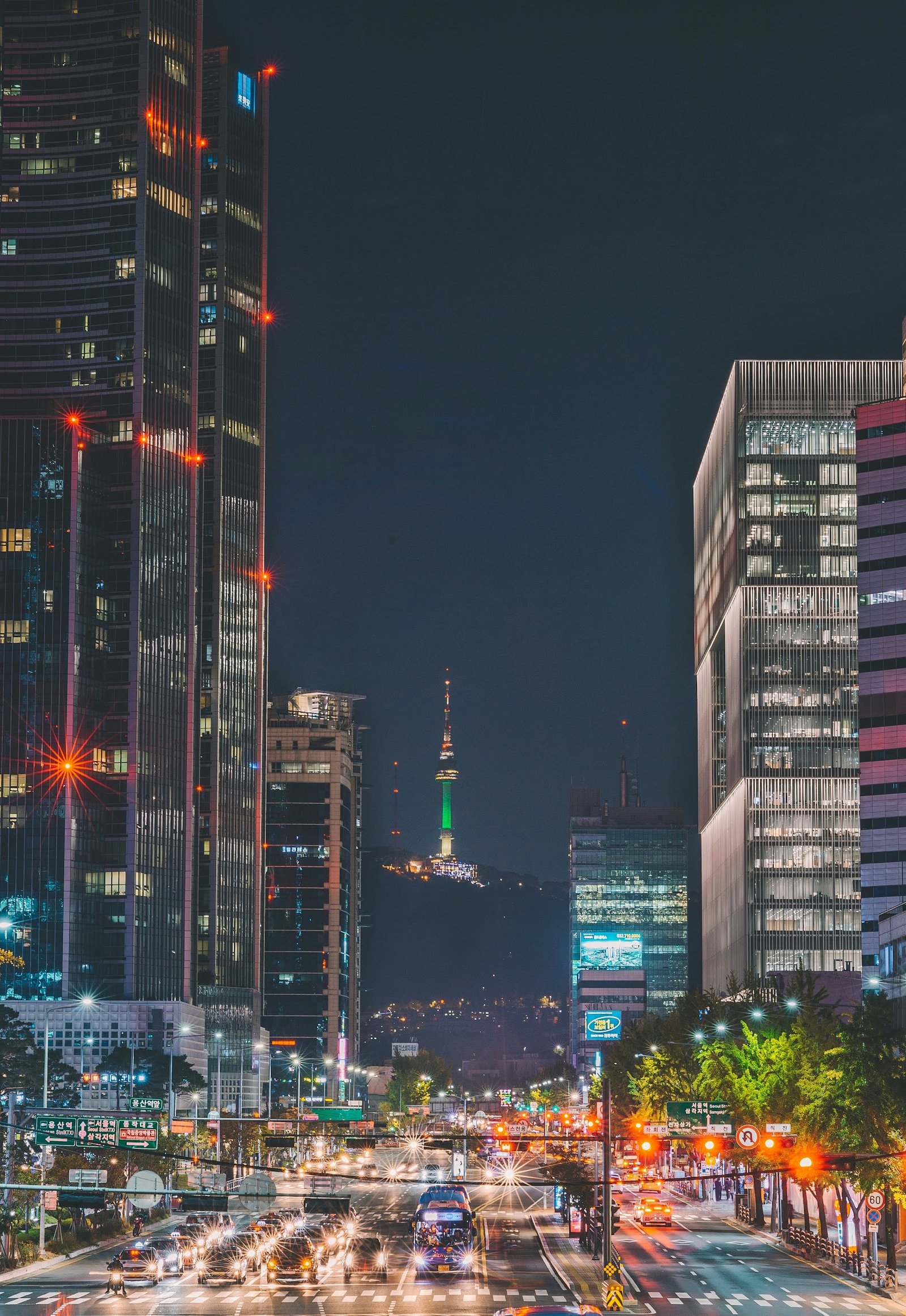
Seoul can feel overwhelming the first time you visit. It is enormous, every neighborhood seems to have its own center, there are thousands of restaurants and cafés, and 2 places that look relatively close on a map can easily require 40 minutes of transportation.
The secret to planning Seoul well is not trying to see everything. It is understanding the different areas of the city, choosing the experiences that actually interest you and organizing your days geographically.
I learned this the hard way. The first time I visited Seoul, in February 2024, I stayed in Myeongdong because I assumed it was the center of the city. I spent only 4 days there, stayed mostly around tourist areas and left without really understanding Seoul, and actually without liking it at all.
This guide brings together what I think is most useful for a first trip, including the essential Seoul landmarks, the neighborhoods actually worth exploring, Korean food, less obvious experiences and the small tricks that can make a huge difference to your trip.
Hi, I’m Audrey.
I’m a professional travel consultant. Over the past 4 years, I’ve explored 50+ countries as a solo female traveler. Through my firsthand experience, local connections, and professional partnerships, I create 100% personalized trips designed around you, your interests, and your travel style, with zero stress.
My goal is simple: to turn your dream trip into reality.
Whether it’s South Korea or any other destination, click below, fill out the questionnaire and let me help you.
You can see several of Seoul’s major attractions in 3 days, but for a first trip I would aim for around 4 to 5 full days.
That gives you enough time for traditional Seoul, 2 or 3 modern neighborhoods, Korean food, shopping, the Han River and a few experiences without turning every day into a race.
With 6 to 7 days, you can start adding the Seoul that often gets left out of shorter itineraries: hiking, local markets, slower neighborhoods, nightlife and places you discover while you are already there.
If you only have 2 or 3 days, do not try to compensate by filling every hour. Choose the parts of Seoul that genuinely match your interests instead.
The easiest way to understand Seoul is as a collection of neighborhoods rather than 1 enormous city center.
Every area has a completely different atmosphere, which is exactly what I misunderstood during my first visit.
If this is your first trip to Seoul, this is where I would experience the traditional side of the city.
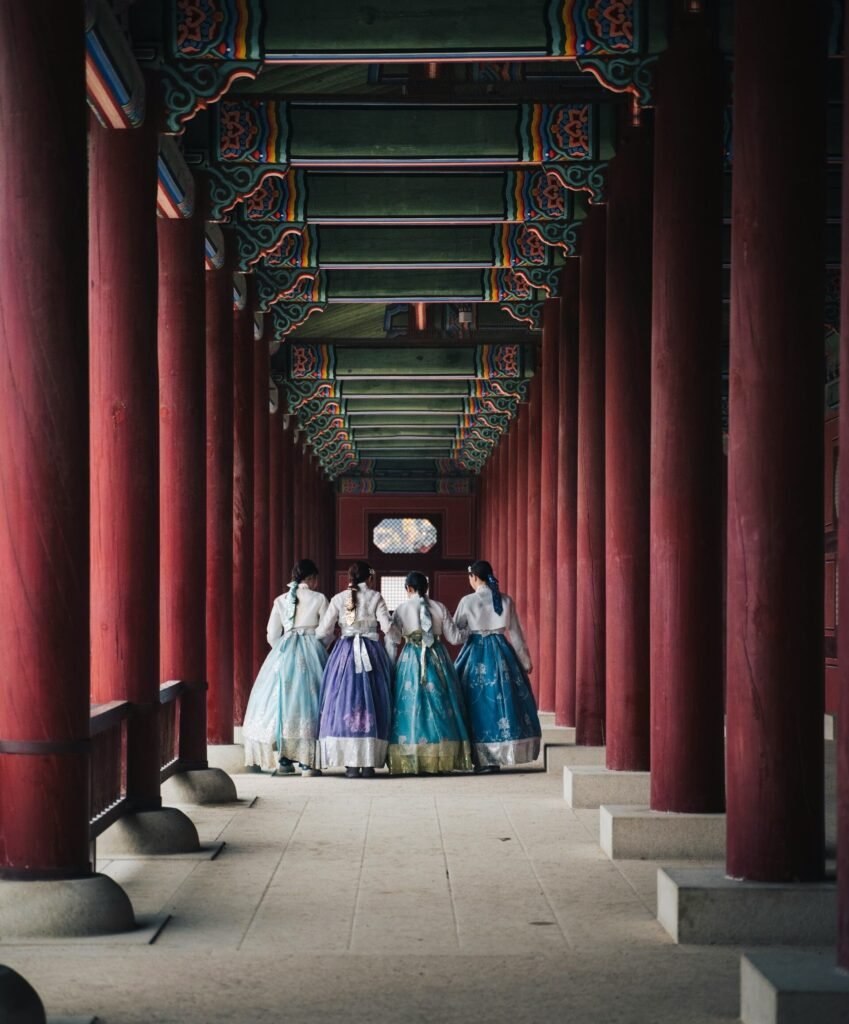
Start with Gyeongbokgung Palace, the largest of Seoul’s royal palaces. One of the most popular experiences is renting a hanbok, traditional Korean clothing, before entering. Rental shops around the palace offer different styles and many include accessories and hairstyling.
From Gyeongbokgung, continue toward Bukchon Hanok Village, known for traditional Korean architecture and narrow streets. Parts of Bukchon are residential, so remember that many of the beautiful houses you are photographing are still people’s homes.
Nearby Insadong is good for traditional crafts, souvenirs, galleries and tea houses, while Ikseon-dong is one of my favorite examples of how Seoul mixes old and new. Traditional hanok buildings have been converted into cafés, restaurants, boutiques and small bars.
USEFUL TRICK: If you are renting a hanbok, do it before entering Gyeongbokgung rather than treating the rental as a separate activity. Then continue through the surrounding historical area. You can experience the palace, Bukchon, Insadong and Ikseon-dong in the same part of the city instead of repeatedly getting back on the subway.
If you dislike crowds, I would also avoid making Ikseon-dong a weekend midday stop. Its narrow streets feel completely different when they are packed.
On the western side of Gyeongbokgung, Seochon offers a quieter alternative to some of Seoul’s most famous traditional neighborhoods.
Older houses sit alongside independent cafés, galleries, restaurants and small shops, and the area is particularly enjoyable if you like wandering without needing a famous attraction every 10 minutes.
I would not prioritize it on an extremely short first trip, but with 5 or more days it is an easy addition to your Gyeongbokgung day and gives you another perspective on central Seoul.
Seongsu is personally my favorite neighborhood in Seoul.
It has almost everything I enjoy in 1 area: good restaurants, interesting cafés, Korean fashion and beauty brands, small places for drinks, constantly changing pop-ups and Seoul Forest and Han River nearby.
What makes Seongsu particularly interesting is that it did not begin as a polished shopping neighborhood. The area was historically associated with factories and workshops, including shoe manufacturing, and some of that industrial character is still visible in the large spaces that have now become cafés, stores and creative venues.
Pop-ups are a huge part of modern Seongsu. Korean and international brands regularly create temporary spaces for product launches, samples, limited collections and elaborate installations.
THE SEONGSU SECRET: Do not research your pop-ups months before your trip. Many are temporary. Check shortly before you arrive and search again while you are actually in Seoul. This is one of the few neighborhoods where an itinerary made 6 months in advance can genuinely be outdated by the time you get there.
Combine Seongsu with Seoul Forest and, if the weather is good, continue toward Ttukseom Hangang Park. This gives you shopping, cafés, greenery and the Han River without spending half the day underground.
Euljiro deserves a place in this guide because it shows you a side of Seoul that is completely different from the polished version you see in Gangnam or Seongsu.
During the day, parts of the neighborhood still feel industrial, with printing businesses, hardware stores, workshops and old commercial buildings. At night, completely different spaces appear between them.
Some bars and restaurants are hidden upstairs in buildings that do not look like nightlife venues at all, and this contrast between old workshops and newer creative businesses has become part of Euljiro’s identity.
Around Euljiro Nogari Alley, people sit outside drinking beer and eating nogari, dried young pollock commonly served as a drinking snack.
If you like nightlife but do not necessarily want clubs, I think Euljiro is much more interesting than simply doing another night in Hongdae.
LOCAL TIP: Euljiro is one of those neighborhoods where the most interesting place may not have an obvious entrance. Look up. Restaurants and bars in Seoul are frequently located on upper floors or inside buildings you would walk straight past in another country.
You can also combine Euljiro with Cheonggyecheon Stream. Walking along the stream after dinner gives you a completely different atmosphere from the surrounding roads and works particularly well as an evening activity.
Hongdae is younger, louder and more chaotic.
Fashion stores, restaurants, clubs, bars, noraebang, arcades, photobooths and street entertainment keep the neighborhood active late into the evening.
If nightlife and being surrounded by people are priorities, Hongdae can be a lot of fun.
Personally, I would not choose it as my base because I prefer somewhere calmer for everyday life, but that is a personal preference rather than a reason to skip the area.
For a softer version, walk toward Yeonnam-dong, where you will find cafés, restaurants and quieter streets while remaining extremely close to Hongdae.
A good combination is Yeonnam during the afternoon, dinner nearby and Hongdae after dark.
Myeongdong is extremely convenient for beauty shopping, cosmetics and international visitors. There are enormous Olive Young stores, Korean beauty brands, street food and countless businesses designed around tourists.
Go if those things interest you.
What I would not do is treat Myeongdong as the center of Seoul. Seoul does not really have 1 center in the way many visitors expect. Where you spend your time depends much more on the type of Seoul you want to experience.
That misunderstanding was one of the main reasons my first 4-day trip felt so different from my later experiences here.
South of the Han River, Seoul becomes more polished and commercial.
Apgujeong and Cheongdam are particularly interesting if you are coming for Korean fashion, beauty, restaurants, luxury shopping or entertainment culture.
Apgujeong Rodeo is one of the areas I would choose for stylish restaurants, cafés and Korean brands, while Cheongdam is more associated with luxury stores and entertainment companies.
This entire side of Seoul is also important for dermatology and aesthetic treatments. If beauty appointments are part of your trip, group them with the rest of your Gangnam, Apgujeong or Cheongdam plans rather than traveling south of the river several different times.
Itaewon is one of Seoul’s most international areas, especially for food and nightlife.
Nearby Hannam-dong feels more polished, with boutiques, cafés and restaurants, while Haebangchon has smaller streets, bars, restaurants and elevated views over parts of the city.
I would explore these areas together rather than dedicating separate days to each.
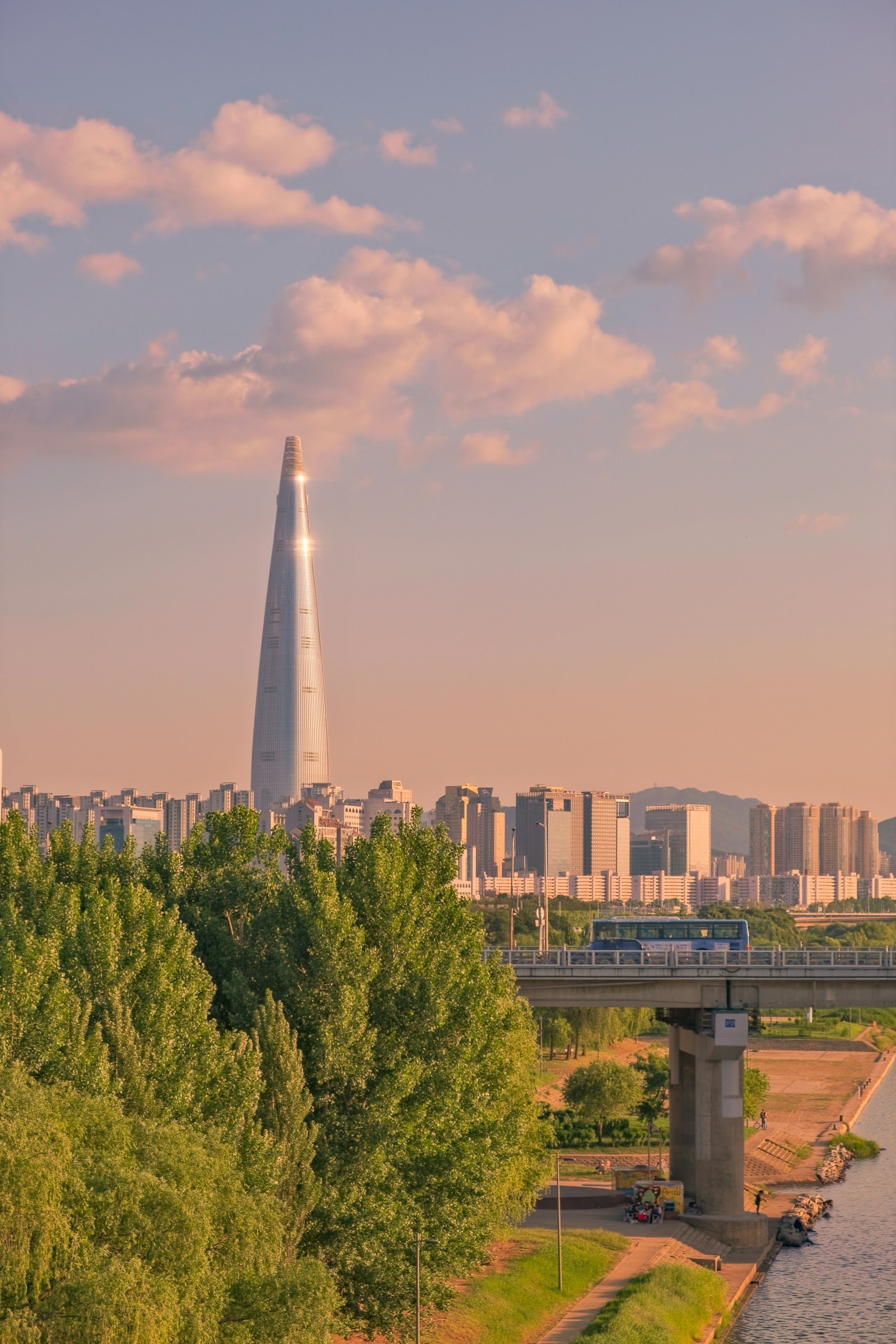
Jamsil makes sense primarily if Lotte World, Seokchon Lake or Lotte World Tower interest you.
Lotte World can easily occupy most of a day, while Seoul Sky inside Lotte World Tower provides one of the city’s highest observation points.
The important thing is geography. Jamsil is not somewhere I would insert randomly between attractions north of the river. If you want to visit, create a Jamsil block and explore the surrounding area at the same time.
Once you have chosen your neighborhoods, add experiences that show you something different rather than simply filling your schedule with attractions.
Yes, it is touristy.
I still think it is worth doing.
Renting a hanbok and visiting Gyeongbokgung gives you a more memorable experience than simply walking through the palace for 30 minutes and leaving.
The trick is to make it part of your traditional Seoul day rather than a standalone photoshoot.
A jjimjilbang is a Korean bathhouse and sauna experience.
Depending on the facility, you may find baths, saunas, heated rooms, relaxation areas and food. Traditional snacks associated with the experience include baked eggs and sikhye, a sweet rice drink.
It is one of the experiences on this list that actually introduces you to an aspect of everyday Korean culture rather than another tourist attraction.
Do not treat the Han River simply as something you cross on the subway.
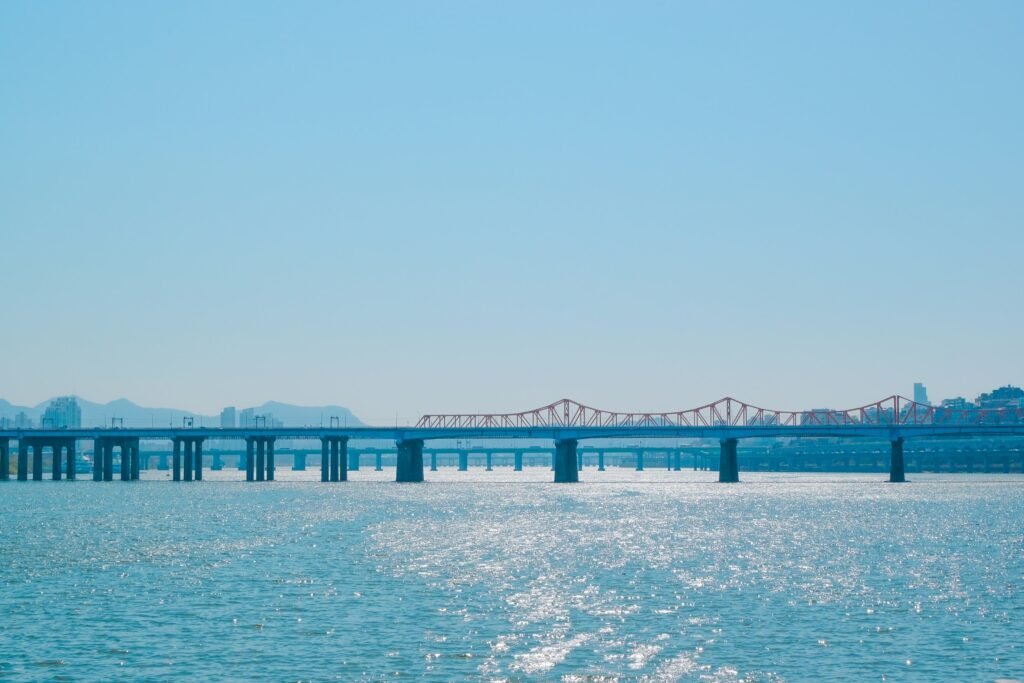
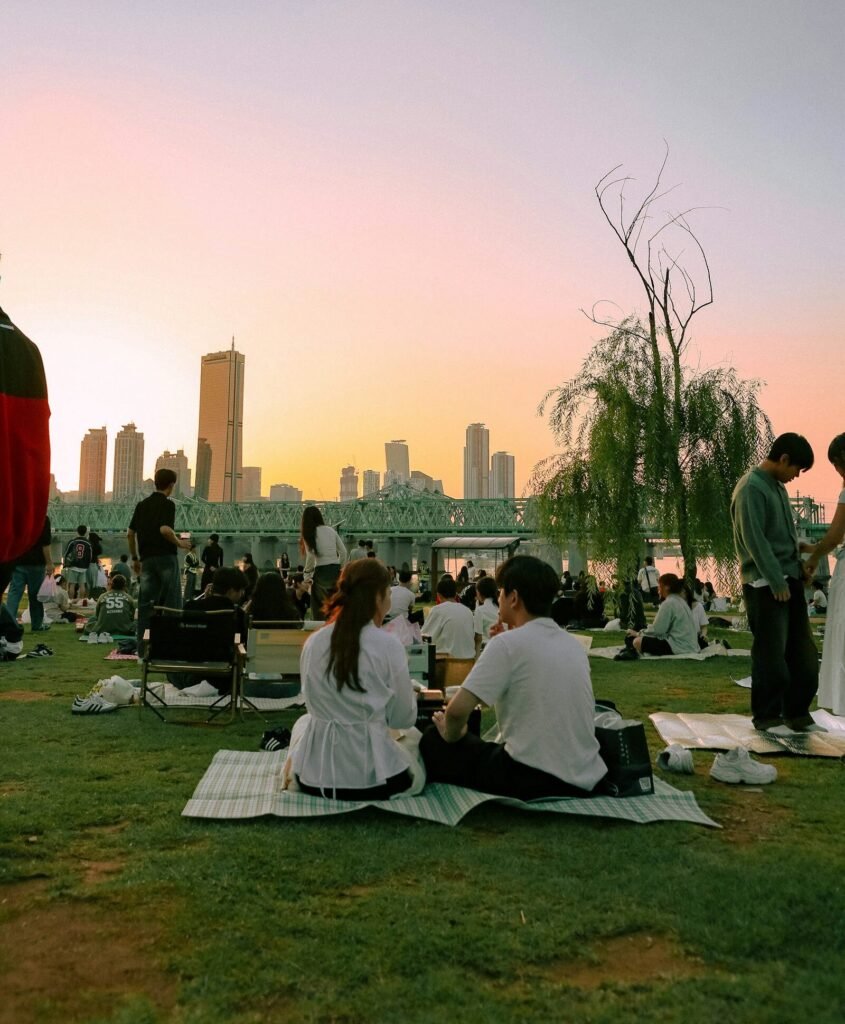
During warmer periods, the parks beside it fill with people walking, cycling, exercising, eating and meeting friends.
Buy food, grab convenience-store snacks or order fried chicken directly at the park and sit beside the river.
Yeouido, Banpo and Ttukseom are popular options, but there is no reason to automatically choose the most famous one. Pick the park that fits the rest of your day.
If you are already in Seongsu, for example, Ttukseom makes far more sense than crossing the city just because another park appeared on a “Top 10 Seoul” list.
Most first-time Seoul itineraries immediately send you to N Seoul Tower or Seoul Sky for a city view.
Those are not your only options.
Seoul is surrounded by mountains, and one of the most interesting ways to understand the city is from above.
Inwangsan is particularly interesting because the trail follows sections of the old Seoul City Wall and gives you views over central Seoul, including the palace area and surrounding mountains.
If you want something less conventional than an observation deck, add a hike instead.
This is also one of the things I think makes Seoul unusual as a megacity. You can spend the morning surrounded by skyscrapers and be on a mountain trail later the same day without leaving the city.
If you eat meat and want something beyond a standard Korean BBQ dinner, look into Majang Meat Market.
It is Korea’s largest meat market and specializes in meat rather than being a tourist food market with dozens of unrelated dishes.
The interesting part is the experience: you can choose meat at the market and find restaurants in the area where it can be prepared and grilled.
If trying Hanwoo, premium Korean beef, is on your list, this is a much more food-focused experience than simply choosing whichever Korean BBQ restaurant is closest to your hotel.
Korean food is not only barbecue, fried chicken and spicy street food.
Temple food gives you a completely different side of Korean cuisine. It is plant-based and closely connected to Korean Buddhist traditions, with a strong focus on vegetables, fermentation and natural ingredients.
If food is one of the main reasons you travel, I would consider this much more interesting than trying a 5th version of something you already ate during the trip.
If you want to take a Korean cooking class, look at what happens before you enter the kitchen.
A class that includes visiting a traditional market, learning about ingredients and then cooking gives you much more context than simply arriving at a studio and following a recipe.
This is the kind of detail I would check before booking any food experience in Seoul.
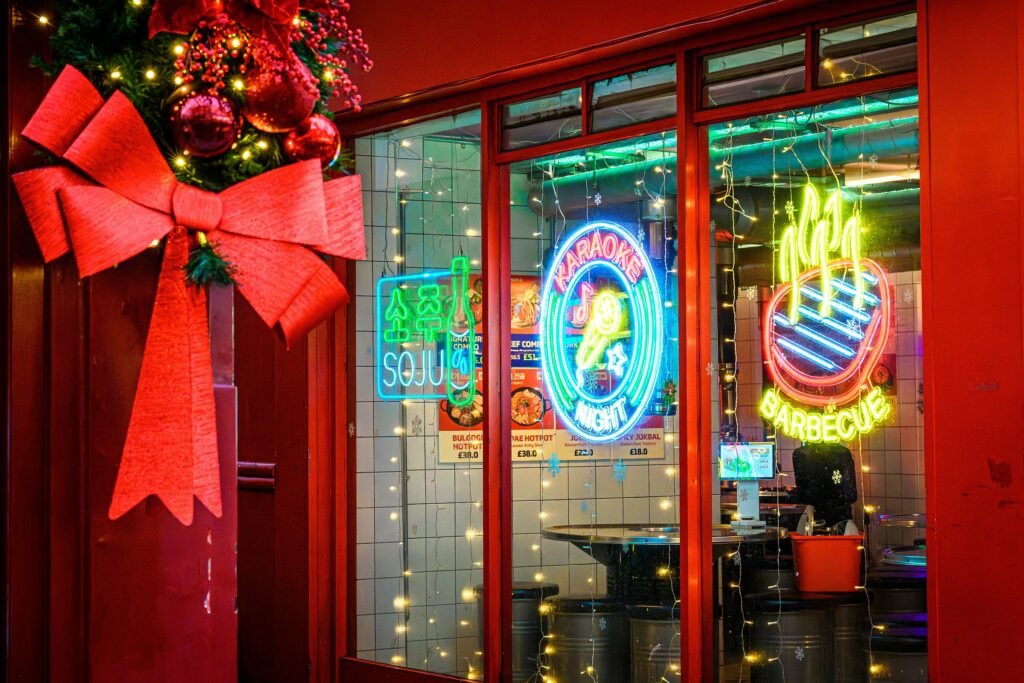
Korean karaoke, or noraebang, is one of the easiest activities to add after dinner.
You rent a private room, choose your songs and stay for however long you booked.
There is absolutely no need to travel across Seoul for a famous noraebang. Unless it offers something genuinely unusual, simply choose one close to wherever you are spending the evening.

Book a one-on-one consultation with me and get personalized advice based on your needs. Let’s talk.
Food deserves actual space in your Seoul itinerary.
After living in Korea, one of the biggest things I learned is that viral does not automatically mean better. Seoul has an enormous restaurant scene, so I would never sacrifice hours of a trip for every restaurant that becomes popular online.
There are, however, several dishes I would actively look for.
If you eat meat, Korean BBQ should be one of your first food experiences.
Samgyeopsal, thick slices of pork belly grilled at the table, is a classic. You normally eat it with lettuce, garlic, sauces and the banchan served alongside the meal.
Part of what makes Korean BBQ enjoyable is the way you eat it. Everyone shares the grill, the side dishes and often several different cuts rather than ordering completely separate meals.
And if the restaurant you saved suddenly has a 2-hour queue, check what is around you before automatically waiting. Seoul has thousands of barbecue restaurants.
Dakgalbi is spicy stir-fried chicken cooked with vegetables, rice cakes and sauce, often directly at your table.
Cheese is a common addition, and fried rice can be prepared in the same pan at the end of the meal.
Korean fried chicken is particularly easy to combine with an evening at the Han River.
You will find plain, soy garlic, sweet, spicy and countless other versions.
The famous combination of chicken and beer is called chimaek, combining chicken with maekju, the Korean word for beer.
Tteokbokki consists of chewy rice cakes cooked in a spicy sauce and is one of Korea’s best-known street foods.
Try a simple street version at least once rather than assuming every food experience needs to be a restaurant reservation.
Kalguksu is made with knife-cut noodles served in broth, while mandu are Korean dumplings that can be steamed, boiled or fried.
Namdaemun even has a Kalguksu Alley, which is a good example of something I love about Seoul’s food scene: sometimes the interesting destination is not 1 famous restaurant but an entire street associated with a dish.
For something beyond the dishes almost every visitor already knows, try jokbal or bossam.
Jokbal is braised pig’s trotters, usually sliced and shared. Bossam consists of boiled pork eaten with vegetables, sauces and accompaniments.
Jangchung-dong is particularly associated with jokbal and has numerous restaurants specializing in it.
Naengmyeon is a cold noodle dish served in chilled broth or with a spicy sauce.
If you want to go further, try Pyeongyang naengmyeon, known for its much more subtle broth. It can be surprising if your idea of Korean food is always extremely spicy or strongly seasoned.
Samgyetang consists of a young chicken filled with ingredients such as rice, garlic and ginseng and cooked in broth.
One of the curious things about it is that Koreans traditionally eat this extremely hot soup during some of the hottest days of summer.
After spending so much time in Korea, there are 3 things I could eat again and again: budae jjigae, kimchi jjigae, and jeon with makgeolli.
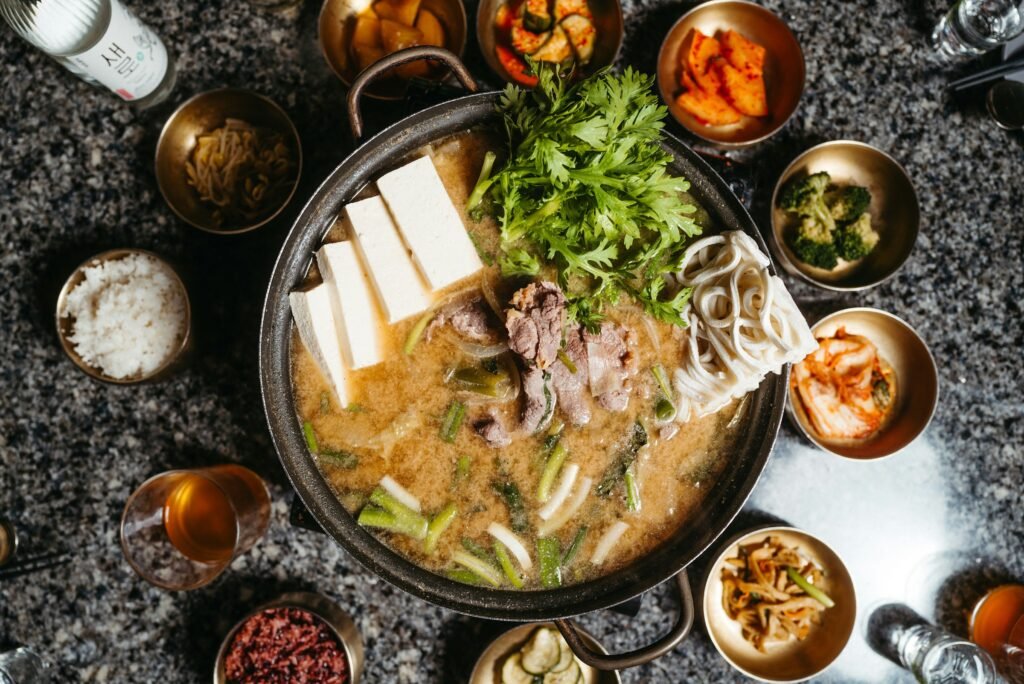
Budae jjigae is probably one of my ultimate comfort foods in Korea. It is a spicy stew usually made with ingredients such as sausage, Spam, tofu, kimchi, noodles and sometimes cheese. It might sound like a strange combination on paper, but somehow everything works together. It is rich, spicy and perfect for sharing, especially when it is cold outside.
Kimchi jjigae is much simpler, but it is one of the Korean dishes I never get tired of. It is a hot kimchi stew typically made with well-fermented kimchi, tofu and a protein option between beef, pork or tuna. You will find it everywhere, from casual neighborhood restaurants to places specializing in stews, and for me it is one of those dishes that genuinely feels like Korean comfort food.
And then there is jeon with makgeolli, which is more about the entire combination than 1 individual dish. Jeon are Korean savory pancakes, with varieties such as kimchi jeon, seafood pajeon and other vegetable or meat versions. Makgeolli is a traditional Korean rice alcohol with a slightly sweet, tangy and creamy taste.
Going out with my friends to a local restaurant and having hot jeon with a bowl of cold makgeolli is one of those things I could never get tired of. It’s my ultimate comfort night in Korea: good food, cold makgeolli, and hours spent around the table with friends.
It is also traditionally associated with rainy days in Korea, so if it starts raining while you are in Seoul, this is one local food tradition I would absolutely use as an excuse to try.
When looking for restaurants in Seoul, don’t rely only on Google Maps or Internet blogs. I personally use Naver Map, which can show you many more local options and makes it much easier to discover the small Korean restaurants you might otherwise miss.
This is actually how I prefer finding food in Seoul: choose the neighborhood you are already exploring, open Naver Map and look at what is around you instead of automatically traveling across the city for a restaurant that went viral online.
And if you don’t want to spend hours searching, I already did the work for you. On my PDF Travel Guides page, you’ll find my full list of traditional and local restaurants, including the addresses of places where you can try authentic Korean food that I actually recommend.
Gwangjang Market is the famous choice and worth visiting for the atmosphere, but I would experience it as a market rather than assuming every famous stall serves the best version of a dish in Seoul.
For something different, Mangwon Market is particularly interesting for food and works perfectly with a Hongdae, Yeonnam and Mangwon day.
And if meat is the focus, Majang Meat Market gives you an entirely different market experience again.
Some Seoul topics deserve much more detail than I can reasonably fit into this article.
After living in Korea, I created dedicated South Korea Digital Guides containing the actual addresses, recommendations, locations and maps I use.
Seoul’s café scene changes constantly. Seongsu, Yeonnam, Ikseon-dong, Hannam and Apgujeong all have completely different styles.
Instead of sending you across Seoul for every viral café, my rule is simple: save a few exceptional places, then choose the rest according to the neighborhood you are already exploring.
My guides contain the specific cafés and local restaurants I actually recommend.
Beauty is a major part of modern Seoul, from Olive Young and Korean skincare brands to dermatology and aesthetic clinics.
Rather than repeating another online list of viral products, my guides cover what I actually recommend buying, skincare and beauty treatments in much more detail.
Hongdae works well for younger fashion, Seongsu for Korean brands and pop-ups, Myeongdong for convenient beauty shopping, and Apgujeong and Cheongdam for more upscale fashion.
And then there is Daiso, where it is very easy to enter for 1 thing and leave with 20.
My guides include my actual shopping and Daiso recommendations rather than turning this article into another enormous product list.
One of the things that makes Seoul particularly fun for me is that your day does not necessarily end after dinner.
Depending on the neighborhood, you can continue with karaoke, cafés, restaurants, nightlife, convenience stores and other activities extremely late.
This completely changes how you can structure your itinerary. You do not necessarily need to fit every entertaining activity between 10 AM and 8 PM.
I created a dedicated Seoul 24/7 guide for exactly this reason, including things you can actually do at unusual hours.
K-pop events, birthday cafés and pop-ups can change constantly, while K-drama filming locations are scattered across the city.
For both, I prefer organizing them around the neighborhoods you already plan to visit rather than letting 1 filming location or temporary event destroy the geography of your entire day.
My dedicated guides go into much more detail.
This article gives you the foundation for planning your trip, but there are certain topics I simply can’t explain properly here without making this guide unnecessarily long.
That’s why I created dedicated South Korea Digital Guides covering the details I’ve learned from actually living here.
Depending on the guide, you’ll find recommendations for what to buy at Olive Young and Daiso, Korean skincare, convenience-store food, beauty clinics and treatments, local restaurants, cafés, shopping, what to pack, how to meet people and much more, including practical addresses, locations and maps.
This article gives you the foundation. My Digital Guides give you the details.
Before you start assigning attractions to days, save everything on Naver Map.
Then look at the clusters.
This is much easier than creating an itinerary first and discovering later that breakfast, lunch and your afternoon activity are all on opposite sides of Seoul.
A few combinations work naturally:
Gyeongbokgung + Bukchon + Insadong + Ikseon-dong for traditional Seoul.
Seongsu + Seoul Forest + Ttukseom Hangang Park for cafés, shopping, greenery and the river.
Hongdae + Yeonnam + Mangwon Market for shopping, food and nightlife.
Euljiro + Gwangjang Market + Cheonggyecheon for markets, old Seoul and an evening out.
Gangnam + Apgujeong + Cheongdam for beauty, fashion and southern Seoul.
Jamsil + Seokchon Lake + Lotte World Tower if Jamsil is part of your trip.
This is probably the single planning trick that will save you the most time.
The subway will probably be your main form of transportation, and a T-money card makes it easy to tap in and out.
For navigation, I personally prefer Naver Map. Kakao Map is another option.
I would not rely primarily on Google Maps in South Korea. Local navigation apps generally give you much more useful information.
For taxis, Kakao T is the main local option, while international visitors can also use K. Ride. Uber works in Seoul as well, and I personally used it for around 1 year.
One small trick: always check the walking time before automatically taking the subway. Seoul stations can be enormous, transfers can involve long underground walks and sometimes walking above ground is easier than taking public transportation for 1 short stop.
There is no universal “best area”.
Seongsu or Seoul Forest would personally be my choice because I like the restaurants, cafés, smaller places for drinks, proximity to the park and overall atmosphere.
Hongdae or Yeonnam make more sense if you want nightlife, younger crowds and a more social environment.
Jongno works well if palaces and traditional Seoul are priorities.
Gangnam is useful if beauty treatments, shopping and southern Seoul dominate your itinerary.
Myeongdong is convenient for sightseeing and shopping, but I would personally choose another area if you want your accommodation neighborhood itself to feel like part of your Seoul experience.
THE DETAIL I WOULD CHECK BEFORE BOOKING: Do not only look at the neighborhood name. Look at the exact nearest subway station and subway line. A hotel that appears slightly farther away on a map can sometimes be much more convenient if it sits beside a line connecting directly to the areas you actually want to visit.
I would not build the trip entirely around the most famous places. Gyeongbokgung and the major attractions deserve space, but Seoul becomes much more interesting when you also experience neighborhoods such as Seongsu, Euljiro, Yeonnam or the Han River.
I would not chase every viral restaurant, café and pop-up either. Trends move incredibly quickly here, and there is always another excellent option nearby.
Do not assume every observation deck, shopping district and famous attraction needs to be checked off. If you would rather hike Inwangsan than pay for another tower view, do that. If you care about food more than palaces, build more food experiences into your trip.
And most importantly, leave some unplanned time.
Seoul is one of the easiest cities to over-plan and one of the most rewarding cities to wander through.
If everything still feels overwhelming, I would build a first Seoul trip around a few completely different experiences.
Spend 1 day discovering traditional Seoul around Gyeongbokgung and the surrounding neighborhoods. Experience modern Seoul in Seongsu. Spend an evening around the Han River. Eat Korean BBQ and try several dishes you have never eaten before. Visit 1 market. Choose 1 cultural experience such as a jjimjilbang, hanbok or cooking class.
Then add 1 Seoul experience that is not on every first-timer checklist, whether that is Euljiro at night, Inwangsan, Majang Meat Market or Korean temple food.
That combination will tell you much more about Seoul than trying to collect 20 famous attractions.
My first trip taught me something I now apply to almost every large city I visit.
Do not judge a city by its most touristy neighborhood.
Seoul is at its best when you understand that there is no single version of it. Traditional Seoul, industrial Seoul, luxury Seoul, nightlife Seoul, beauty Seoul and everyday residential Seoul can feel like completely different cities.
Plan enough that you do not waste your days crossing from one side to the other.
But do not plan so much that you never get to discover anything yourself.
Click below, fill out the questionnaire, and I’ll bring your dream trip to life, 100% personalized around you.
Want to discover more about K-SOUL Travel and how I can help you? I’m a Professional Travel Consultant, and I can personally design your entire trip from scratch, creating a fully customized itinerary based on your destination, budget, travel style, and specific needs — including honeymoons, special occasions, solo female travel, and Muslim & Halal-friendly trips. You can also book a private consultation with me, join one of the group trips I personally host, or explore 50+ PDF travel guides. If you found this article helpful and want to support my work, discover K-SOUL Travel — I’d love to help you create your next adventure.
All South Korea travel guides →
Want a trip designed entirely around you? Design your trip with K-SOUL →