14 min read – Last update: November 20, 2026
South Korea is one of those countries that can feel completely different depending on how you experience it.
I have been living in South Korea for 2 and a half years, but my relationship with the country definitely wasn’t love at first sight. My first 4-day trip was actually one of my least enjoyable trips in Asia. I came back a few months later, learned how Korea really worked, discovered the country beyond its most touristy areas and completely fell in love with it.
Today, Korea is the place I call home.
This guide covers everything I wish I had known before my first trip: when to visit, where to go, how much to budget, transportation, essential apps, safety, culture and all the practical details that can make your trip significantly easier.
Hi, I’m Audrey.
I’m a professional travel consultant. Over the past 4 years, I’ve explored 50+ countries as a solo female traveler. Through my firsthand experience, local connections, and professional partnerships, I create 100% personalized trips designed around you, your interests, and your travel style, with zero stress.
My goal is simple: to turn your dream trip into reality.
Whether it’s Korea or any other destination, click below, fill out the questionnaire and let me help you.
Capital | Seoul |
Currency | South Korean Won (KRW / ₩) |
Language | Korean |
Time Zone | Korea Standard Time, UTC+9 |
Emergency Numbers | Police 112, Fire & Ambulance 119 |
Tourist Helpline | 1330 |
Main International Airport | Incheon International Airport (ICN) |
South Korea has 4 very distinct seasons, and choosing the right one can completely change your experience. For most first-time visitors, I would recommend spring or fall, especially if you plan to spend a lot of time walking and sightseeing.
Spring is one of the most popular times to visit. Temperatures gradually become milder, flowers begin blooming and cherry blossom season transforms parks, palaces and streets across the country.
April is particularly popular, although exact blossom dates change every year and vary by region. Famous blossom spots can become extremely crowded and accommodation can be more expensive during peak dates.
Early spring can still be cold, so pack layers.
Best for: cherry blossoms, sightseeing and photography.
Korean summers are hot, extremely humid and can be rainy. July and August can feel particularly uncomfortable if your plan involves walking around Seoul all day.
Summer is better suited to travelers interested in beaches and coastal destinations such as Busan and Jeju. Pack breathable clothes, sunscreen, comfortable shoes and an umbrella.
Best for: beaches, coastal destinations and summer activities.
Fall is one of my favorite periods in Korea. The intense summer humidity disappears, temperatures become much more comfortable and the country gradually turns red, orange and yellow.
October and early November are particularly beautiful for parks, temples, hiking and outdoor sightseeing.
Best for: first-time visitors, sightseeing, hiking and fall foliage.
Do not underestimate Korean winter.
I have experienced 3 winters while living here, and during the winter of 2025 I experienced temperatures in Seoul around -19°C (-2°F), with perceived temperatures of approximately -23°C (-9°F).
My first trip to Korea was at the end of February 2024, and I arrived completely unprepared. I have traveled to Finland, Sweden and even the Arctic Circle, but nowhere was cold as korea, I was shocked by how intense the Korean cold felt to me. I eventually had to buy additional winter clothes and even a balaclava because my face became painfully cold while walking.
If you visit in winter, bring thermal layers, a proper winter coat, gloves, warm socks and something to protect your face.
Best for: snow, skiing and winter experiences.
For cherry blossoms, plan around late March and April depending on the year and region. For comfortable sightseeing, April, May, October and early November are excellent choices. For fall foliage, choose October or November; for beaches, summer; and for snow and skiing, winter.
For a first trip, I would personally choose spring or fall.
For a first trip, I recommend approximately 10–14 days.
With 5–7 days, focus mainly on Seoul and add 1 day trip or another destination. With 10 days, combine Seoul with 2 additional destinations. With 14 days, you can include Seoul, Gyeongju, Busan and potentially Jeju without rushing.
If you have around 3 weeks, slow everything down and consider secondary destinations such as Jeonju, Sokcho or Gangneung.
Trying to see the entire country in 7 days will usually mean spending too much of your vacation moving between hotels and stations.
Give Seoul time. Visit the royal palaces and traditional neighborhoods, explore different districts, experience Korean markets and restaurants, discover K-beauty and shopping, spend an evening along the Han River and leave enough free time to enjoy the city beyond a checklist of attractions.
Seoul is enormous, and its neighborhoods can feel like completely different cities. Don’t treat it as a destination you can properly experience in 2 days.
Gyeongju offers a completely different perspective on Korea. Explore historical sites, temples and traditional architecture, including areas around Daereungwon, Donggung Palace and Wolji Pond and Woljeonggyo Bridge.
If Korean history interests you, Gyeongju is one destination I would not overlook.
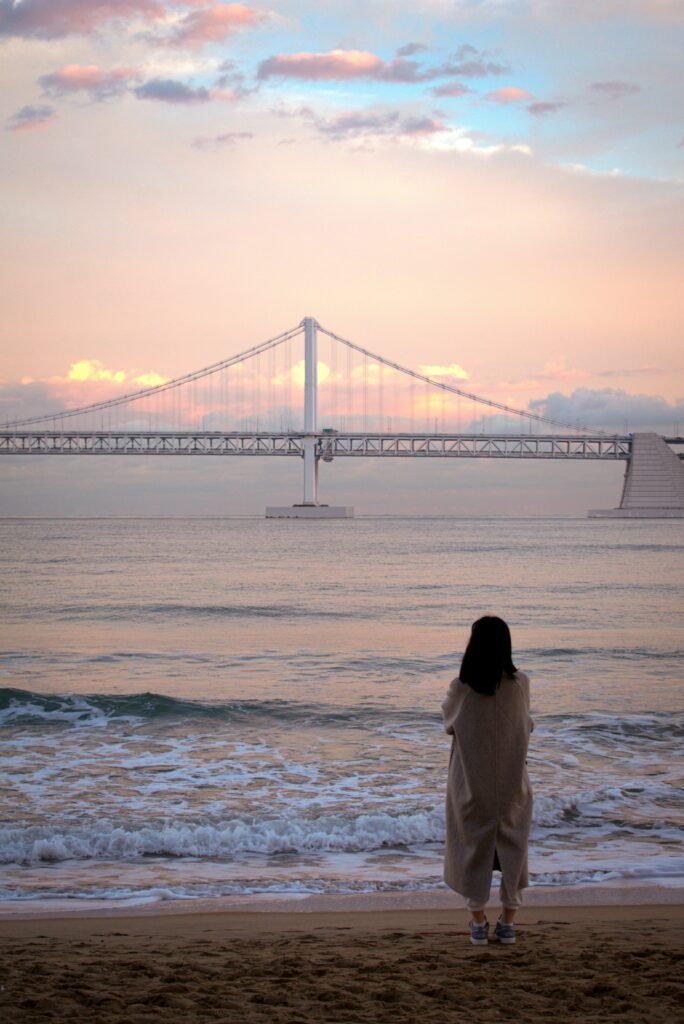
Continue south to Busan for beaches, seafood markets, coastal scenery and a different urban atmosphere from Seoul.
Give yourself enough time to explore the coast, local markets and different neighborhoods rather than treating Busan as a quick overnight stop.
Finish your trip surrounded by nature. Jeju offers volcanic landscapes, waterfalls, beaches, hiking and beautiful coastal drives.
If you’re comfortable driving abroad, renting a car can give you considerably more flexibility.
If you have only 10 days, remove Jeju or shorten the route. If you have only 7 days, use Seoul as your main base and add 1 additional destination or day trip.
For your first introduction to Korea and big-city life, start with Seoul. For beaches, seafood and coastal city life, choose Busan. If history is your priority, add Gyeongju, while Jeju is ideal for nature and road trips.
Travelers interested in traditional architecture and food can consider Jeonju, while Sokcho and Seoraksan are excellent for mountains and hiking. For coastal scenery, consider Gangneung, and if cherry blossoms are your priority, Jinhae is one of Korea’s most famous seasonal destinations.
The biggest mistake is assuming South Korea begins and ends with Seoul. It doesn’t.
Book a one-on-one consultation with me and get personalized advice based on your needs. Let’s talk.
South Korea can accommodate very different travel budgets. Your biggest expenses will normally be accommodation, food, transportation between cities, shopping, nightlife and private experiences.
Travel Style | Daily Budget | Approx. 10 Days |
Budget | ₩70,000–₩120,000 (50–85) | ₩700,000–₩1,200,000 (500–850) |
Mid-Range | ₩120,000–₩250,000 (85–180) | ₩1,200,000–₩2,500,000 (850–1,800) |
Comfortable / Luxury | ₩250,000+ ($180+) | ₩2,500,000+ ($1,800+) |
These estimates exclude international flights and major shopping. A budget traveler can keep costs relatively low with simple accommodation, local restaurants and public transportation, while beauty treatments, premium hotels, nightlife and shopping can increase your budget very quickly.
All USD equivalents are approximate because exchange rates fluctuate.
A tourist budget is not necessarily the same budget you need once you understand how Korea works.
I grew up in Italy and have also lived in Portugal, Switzerland and Japan, and Korea remains one of the places where I personally find everyday life surprisingly really affordable.
If you’re traveling on a budget, live a little more like a local. Consider an Airbnb or apartment-style accommodation instead of an expensive hotel, eat at local Korean restaurants instead of tourist-oriented places,use buses and subways rather than constantly taking taxis and shop at local supermarkets or markets instead of CV’s stores.
In my personal experience, these small choices can make your trip around 40% cheaper than the tourist-style budgets you often see suggested online.
South Korea is extremely card-friendly, and I pay by card almost everywhere. I’ve occasionally had problems with American Express, but only in a small percentage of places.
I still recommend carrying some Korean Won. Cash can be useful in traditional markets and at small street-food stalls, although many of these now accept cards too.
Korea has an excellent transportation network. Within Seoul and other major cities, buses and subways can take you almost everywhere. A transportation card such as T-money makes daily travel much easier.
For longer distances, intercity buses and trains, including the high-speed KTX, connect major destinations. If you’re traveling to Jeju, flying is normally the most practical option.
Taxis are also relatively accessible. I personally use Kakao T, while Uber also works in Korea and was actually the app I used regularly for around 1 year. International visitors can also use K.Ride, which is designed to make taxi booking more accessible to travelers.
The biggest advice I can give you is: do not rely exclusively on Google Maps.
I made this mistake during my first trip and constantly struggled with routes, businesses and public transportation information.
My favorite navigation app is Naver Map, which is excellent not only for directions but also for discovering restaurants, attractions and things to do. Kakao Map is another good alternative.
For taxis, use Kakao T, K.Ride or Uber. KakaoTalk is Korea’s dominant messaging app, while Papago is particularly useful for Korean translation.
Once I stopped relying on Google Maps and started using Korean apps, traveling became dramatically easier
This was genuinely one of the most frustrating parts of my first months in Korea.
I spent my first 8 months here as a tourist, so I didn’t have a Korean bank account or the same local verification setup as a resident. Many Korean delivery and shopping apps have traditionally required some combination of a Korean phone number, local verification or Korean payment methods.
This can affect restaurant delivery, grocery delivery and online shopping, particularly on platforms such as Coupang.
And this matters because Korea has an incredible delivery culture. Once you can properly access local services, ordering groceries and household products online can be extremely convenient and, depending on what you’re buying, cheaper than constantly purchasing things individually from convenience stores or physical shops.
When I was here as a tourist, people recommended alternative delivery services supposedly available to foreigners. Personally, I never managed to make them work reliably enough to depend on them.
The situation is gradually becoming more foreigner-friendly, with more multilingual services and international payment options appearing. However, don’t arrive assuming every Korean delivery and shopping app will automatically work with a foreign phone number and foreign bank card.
Before choosing your accommodation, understand one important thing: Seoul does not have one single city center.
It is a gigantic city made up of different districts, each with its own restaurants, cafés, shopping, nightlife and atmosphere.
Hongdae is lively and popular with younger travelers interested in nightlife, restaurants and shopping. Myeongdong is extremely convenient for shopping and major attractions but is also heavily tourist-oriented. Gangnam offers a polished, modern side of Seoul with beauty, shopping and nightlife, while Jongno and Insadong are better suited to travelers interested in palaces, history and traditional areas.
During my first trip, I booked Myeongdong because I assumed it was simply “the center of Seoul.” I ate in touristy places and didn’t really understand how the city worked. When I returned a few months later and started exploring different neighborhoods and local restaurants, my perception of Seoul completely changed.
Your neighborhood really can change your experience.
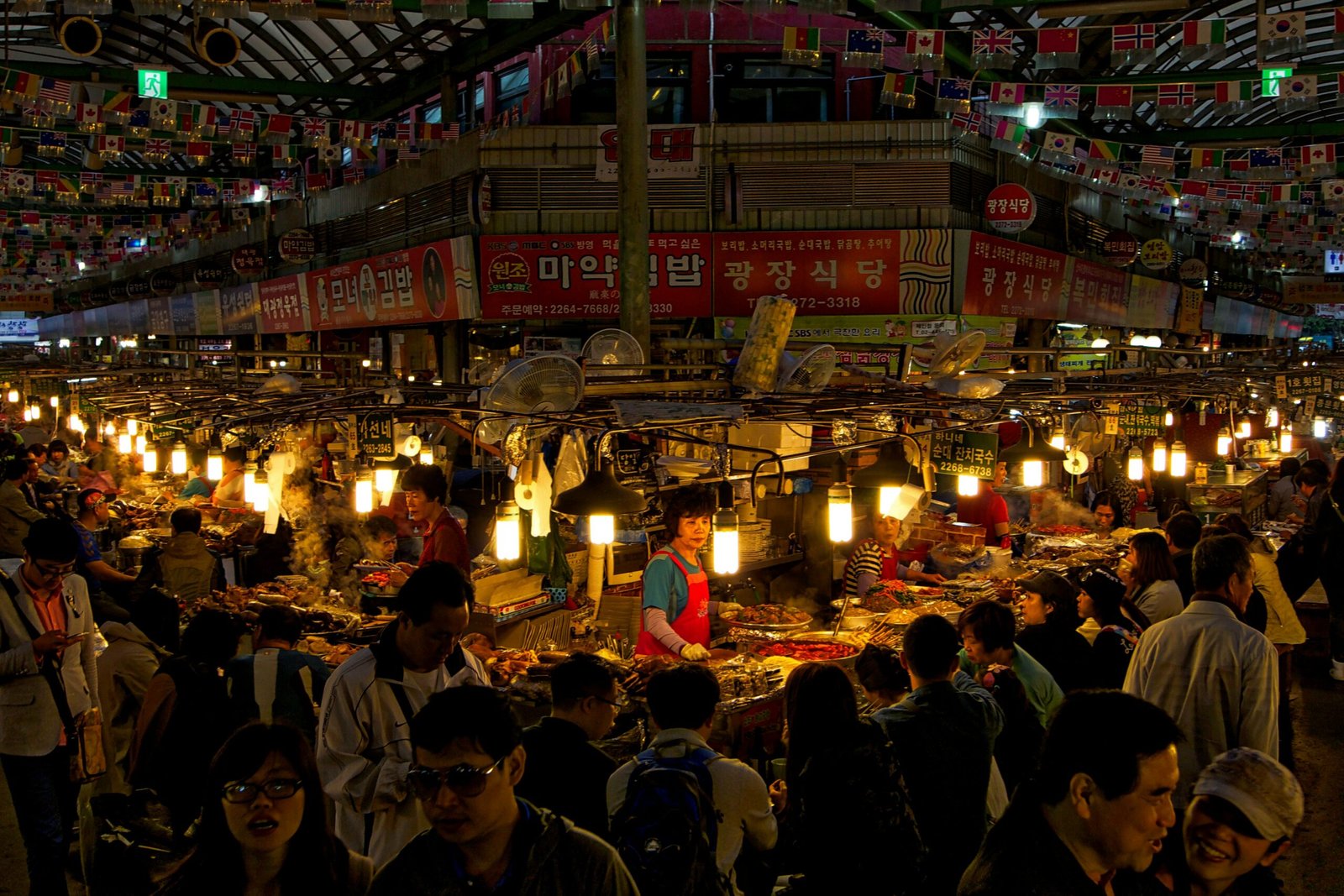
Food is a huge part of traveling through Korea. Some classics worth trying include Korean BBQ, bibimbap, tteokbokki, gimbap, Korean fried chicken, kimchi jjigae, sundubu jjigae, samgyetang, naengmyeon, traditional market food and street food.
Don’t judge Korean cuisine exclusively by what you eat in tourist-heavy areas. That was one of my mistakes during my first trip. Once I started eating where locals actually eat, my opinion completely changed.
Solo travelers should also know that some dishes, including certain Korean BBQ meals, are designed for groups or may require minimum portions. However, Korea also has countless soups, noodles, rice dishes and casual restaurants where eating alone is completely normal.
This article gives you the foundation for planning your trip, but there are certain topics I simply can’t explain properly here without making this guide unnecessarily long.
That’s why I created dedicated South Korea Digital Guides covering the details I’ve learned from actually living here.
Depending on the guide, you’ll find recommendations for what to buy at Olive Young and Daiso, Korean skincare, convenience-store food, beauty clinics and treatments, local restaurants, cafés, shopping, what to pack, how to meet people and much more, including practical addresses, locations and maps.
This article gives you the foundation. My Digital Guides give you the details.
Understanding a few cultural differences will make your trip much easier.
Tipping is not part of normal Korean service culture, so you generally don’t need to tip at restaurants, cafés or in taxis.
I learned this myself after buying bungeoppang from a street vendor. I tried to insist on leaving a tip, he kept refusing and I kept insisting because I thought I was being nice. Instead, the interaction simply became awkward.
Pay the price, say thank you and don’t feel guilty about not tipping.
Always remove your shoes when entering someone’s home. You may also be expected to remove them in certain accommodations and some traditional restaurants.
On buses and subways, respect seats reserved for elderly passengers, pregnant women and people who need additional assistance.
Korean ideas of revealing clothing can be different from Western standards. Very short skirts and shorts can be completely normal, while deep cleavage may attract significantly more attention and be seen as inappropriate. So cover your chest and sounders but no worries about mini-skirts. (Fun fact: in Italy, where I grew up, it’s the opposite, so it was quite weird and difficult for me to adapt. In fact, now I don’t show either my butt cheeks or my chest hahaha.)
You don’t need to change how you dress; just understand that cultural standards can be different.
One thing that surprised me in Korea is the way people often deal with lost belongings. If someone finds an item that appears to have been accidentally left behind, they will often simply leave it exactly where it is.
The idea is that the owner will probably retrace their steps and come back looking for it. Moving the item somewhere else, even with good intentions, can actually make it more difficult for them to find.
I’ve personally forgotten belongings several times and returned hours later to find them exactly where I had left them. So if you find someone’s umbrella, shopping bag, phone, credit card or another personal item in Korea, don’t automatically pick it up and move it somewhere else. Unless there is a clear reason to hand it to staff or the authorities, leaving it where the owner is most likely to look for it can actually be the most helpful thing to do.
Avoid deliberately photographing strangers without permission, particularly when an identifiable person is clearly the subject.
Beyond the legal considerations, respecting people’s privacy is simply the safest rule.
Korean social culture can feel different from countries where strangers regularly chat in elevators, apartment buildings or queues. People generally don’t engage in constant casual small talk with strangers, so don’t automatically interpret this as unfriendliness.
You can absolutely travel through Korea without speaking Korean, but don’t expect everyone to speak English.
Based purely on my own experience, I would rate everyday English communication at around 4/10.
What I appreciate is people’s willingness to communicate. Countless times, someone who couldn’t speak English has patiently waited while I typed something into a translator and then responded the same way.
Keep Papago or another translation tool ready and don’t panic about the language barrier.
South Korea is the country where I have personally felt safest in the world, and that feeling was one of the important reasons I decided to make Korea my home.
I’ve forgotten my phone in restaurants and had staff keep it safely for me. Once, I left my credit card at a photo booth and returned almost 7 hours later to find that someone had taped it beside the machine so I could find it.
I’ve become extremely relaxed about my belongings while living here, although I don’t recommend becoming careless. A friend of mine had her phone stolen in Hongdae, and crime can happen anywhere.
Enjoy the sense of safety, but maintain normal travel awareness.
From my personal experience, South Korea is the destination where I have felt most comfortable as a woman.
I would still be more cautious around nightlife. Areas such as Hongdae and Itaewon can become extremely busy late at night, with many drunk people around, and some men can become persistent or annoying.
Watch your drink, know how you’re getting home, keep an eye on your belongings and don’t follow strangers somewhere you don’t know. Feeling safe should make your trip more enjoyable, not make you stop paying attention.
I once left the gym and discovered that a man behind me appeared to be secretly taking photos or videos of me. A young Korean man noticed what was happening, stopped him, alerted me and confronted him until the material was deleted.
So yes, Korea feels incredibly safe to me, but people with bad intentions exist everywhere. They come in every color, age and nationality, and no country is completely free of them.
Still, from my personal experience: 9.8/10 for safety.
I’ve seen travelers online complain about older Koreans staring, pushing in the subway or behaving rudely. That simply hasn’t reflected my own experience.
Some of my sweetest memories involve older Korean women. Women have helped me find directions and carry my bags without me asking. At my swimming pool, an older woman once helped dry my hair because she didn’t want me going outside with wet hair, while at a jjimjilbang another offered to scrub my back, without even knowing my name.
My approach is simple: arrive with respect instead of expecting everyone to behave according to your own culture. In my experience, that respect is usually returned.
It can happen that people stare at you, especially in smaller cities, and older people, because South Korea still doesn’t receive the same level of international tourism everywhere.
You may attract more attention if you wear a hijab, if you’re Black, have a lot of tattoos, have a very distinctive or unusual style, or are dressed in a more revealing way. The same can happen if you simply look very different from what some people are used to seeing, for example if you have very light skin, blonde hair and blue eyes.
This is particularly true with some older generations who grew up at a time when Korea had far fewer international visitors and much less exposure to people with very different appearances, styles and backgrounds.
So don’t immediately assume that someone staring at you is judging you negatively. Most of the time, they may simply be curious because you look different from what they’re used to seeing. Sometimes, they may even be looking at you because they find your appearance or style interesting or beautiful.
Overall, I find South Korea very clean, and public bathrooms in subway stations, train stations and other public spaces are generally in excellent condition.
At certain times, particularly when restaurants are closing, businesses may place garbage outside while waiting for collection. A street can temporarily look much messier before everything is collected.
Unlike my experience in Japan, I also generally don’t find it particularly difficult to find public trash bins in Korea
Beauty culture is impossible to ignore in Korea. Beauty standards can be strict, and cosmetic procedures, skincare, fashion and grooming are highly visible parts of modern Korean culture.
What fascinates me is how much attention many people put into their appearance. You’ll see carefully styled outfits, hair and makeup, skincare everywhere and an enormous beauty industry aimed at both women and men.
Don’t assume every Korean skincare product or aesthetic treatment is automatically right for you. Research before booking anything. I have separate Digital Guides dedicated to Korean skincare, shopping and beauty clinics because those topics deserve much more detail than I can fit here.
South Korea is not somewhere I would spend an entire vacation worrying about scams, but basic awareness is still important.
Be cautious when strangers become unusually persistent about inviting you to religious, cultural or private events, particularly when you don’t fully understand where you’re being taken or what is expected from you.
In highly tourist-oriented areas, check prices before ordering or buying when they aren’t clearly displayed. For taxis, booking through Kakao T, K.Ride or Uber gives you more information about your route and fare.
For tourism-related assistance, you can contact the 1330 Korea Travel Helpline.
The 2 major holidays travelers should pay particular attention to are Seollal, Korean Lunar New Year, and Chuseok.
During these periods, huge numbers of people travel around the country to visit family. Intercity trains and buses can become extremely difficult to book, while some businesses may close or operate differently.
If your trip overlaps with either holiday, organize long-distance transportation as early as possible.
Entry requirements depend on your passport.
Some travelers can enter South Korea visa-free, others require a visa, and K-ETA requirements can vary depending on nationality and temporary government policies.
Never assume information from an old TikTok, blog or travel video still applies. Always check the current official requirements for your specific passport before booking and check them again shortly before departure.
Verify whether you need a visa, whether you qualify for visa-free entry and whether a K-ETA or another arrival procedure applies to you
Don’t rely only on Google Maps. Don’t assume Myeongdong represents all of Seoul. Don’t eat exclusively in tourist-heavy areas or try to visit the entire country in 7 days.
Don’t underestimate summer humidity or winter cold. Download your navigation and translation apps before arriving, plan intercity transportation carefully around major holidays and don’t assume everyone speaks English.
Most importantly, don’t become careless simply because Korea feels safe and don’t plan every minute of your trip.
Your packing list depends heavily on the season.
In spring and fall, bring comfortable walking shoes, layers and a light or medium jacket depending on the month.
In summer, prioritize breathable clothing, sunscreen, an umbrella, comfortable shoes and a reusable water bottle.
In winter, bring thermal base layers, a proper winter coat, gloves, warm socks, a scarf and adequate protection for your face.
If you want a complete packing list rather than a general overview, I have a dedicated Korea Packing Guide with much more detailed recommendations.
Before leaving, check the entry requirements for your passport, book accommodation and important intercity transportation, download Naver Map and a translation app, organize your SIM or eSIM and understand how you’ll use public transportation.
I also recommend travel insurance, weather-appropriate clothing, a small amount of Korean Won and saving your first destinations in your map app before landing.
If your trip overlaps with Seollal, Chuseok or another major travel period, organize long-distance transportation early.
My first trip to South Korea lasted only 4 days at the end of February 2024, and it was honestly one of my least enjoyable travel experiences.
I arrived completely unprepared for the freezing weather, booked accommodation in Myeongdong because I assumed it was the center of Seoul, relied on the wrong navigation tools and spent most of my time in tourist-heavy areas.
A few months later, in May 2024, I decided to give Korea another chance.
That second experience completely changed my perspective. I explored different neighborhoods, discovered local restaurants, learned how to navigate Seoul properly and experienced a sense of safety and independence that I had never felt anywhere else as a woman.
I fell in love with the country.
I stayed, and I have now been living in South Korea for 2 and a half years.
If there is one thing I want you to take from this guide, it is this: don’t judge Korea solely by its most touristy version.
Explore beyond Myeongdong, discover neighborhoods you had never heard of before planning your trip, eat where locals eat and take the time to understand how the country works.
It completely changed Korea for me.
And after 2 and a half years of living here, I can tell you that I could honestly write an entire book about South Korea.
There is so much more to this country than I could ever fit into one article. Seoul alone can feel like a city that is active 24 hours a day. You can walk outside at 3 AM and, depending on the area, go shopping, buy fruit at a market, stop by a supermarket or pharmacy, eat at a restaurant, go bowling, relax at a jjimjilbang, play games at a PC bang or find countless other things to do.
Then there is the entire world of Korean skincare, beauty treatments, aesthetic and plastic surgery clinics, café culture, nightlife and clubs, shopping, food, wellness, convenience stores and all the unique activities and experiences that make South Korea such a fascinating place to explore.
For me, Korea is an entire world of its own, and every part of it deserves to be explored.
That’s why I wanted this guide to focus on the essential information you need for your first trip: weather, transportation, essential apps, entry requirements, cities, costs, safety and ideas for building your itinerary. Trying to fit everything I know and love about Korea into one article would be impossible.
If you want to go deeper, you can book a private consultation with me and ask me your questions directly, or explore my South Korea Digital Guides, where I cover specific parts of traveling and experiencing Korea in much more detail.
Click below, fill out the questionnaire, and I’ll bring your dream trip to life, 100% personalized around you.
Want to discover more about K-SOUL Travel and how I can help you? I’m a Professional Travel Consultant, and I can personally design your entire trip from scratch, creating a fully customized itinerary based on your destination, budget, travel style, and specific needs — including honeymoons, special occasions, solo female travel, and Muslim & Halal-friendly trips. You can also book a private consultation with me, join one of the group trips I personally host, or explore 50+ PDF travel guides. If you found this article helpful and want to support my work, discover K-SOUL Travel — I’d love to help you create your next adventure.
All South Korea travel guides →
Want a trip designed entirely around you? Design your trip with K-SOUL →